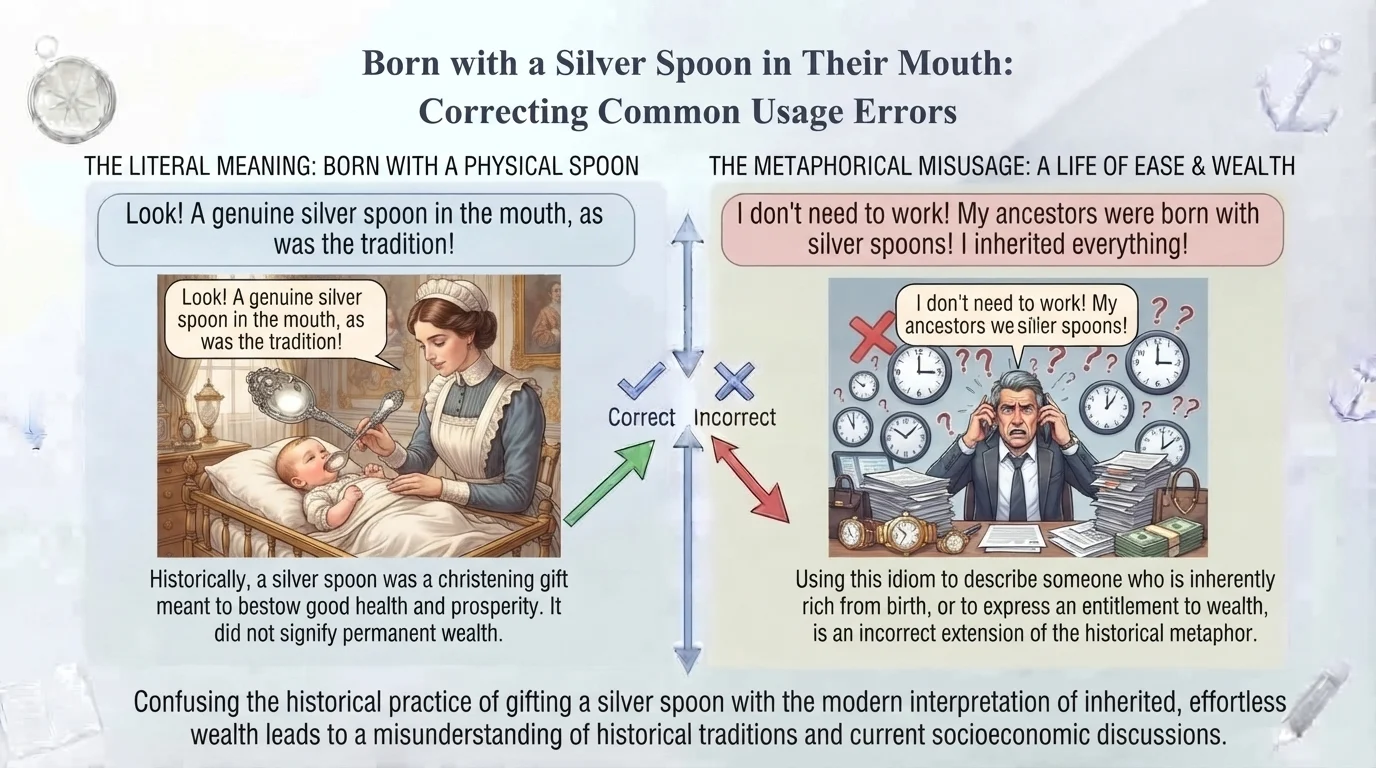
The phrase “born with a silver spoon in their mouth” is a common English idiom used to describe someone who was born into a wealthy, privileged, or financially comfortable family. It suggests that the person had advantages from birth that other people may have had to work hard to achieve. These advantages can include money, education, family connections, social status, or access to opportunities.
When someone says, “She was born with a silver spoon in her mouth,” they usually mean that she grew up with financial security and opportunities because of her family background. The expression does not literally mean that a baby was born with a silver spoon. Instead, it is a figurative way of talking about wealth, privilege, inherited advantages, and an easy start in life. Depending on the context and tone, the phrase can be neutral, humorous, admiring, or slightly critical.
Quick Answer
“Born with a silver spoon in their mouth” means being born into a wealthy or privileged family. It describes someone who has financial security, social advantages, or valuable opportunities from birth rather than having to build everything from nothing.
Why People Confuse It
People sometimes misunderstand this idiom because its literal image sounds strange. A newborn obviously cannot be born while holding or eating from a silver spoon.
The phrase is figurative, not literal.
Another source of confusion is the word “silver.” In this expression, silver represents wealth, comfort, and privilege. The phrase is closely associated with having an advantageous start in life.
For example:
“He was born with a silver spoon in his mouth.”
This does not mean he literally had a silver spoon in his mouth at birth. It means his family was wealthy or well-off.
People may also confuse this expression with similar phrases such as:
- Born into wealth
- Born into privilege
- Born into a rich family
- Come from money
- Have a privileged upbringing
First Word: Born
Born is the past participle of bear in the passive s ense and refers to the beginning of someone’s life.
In the idiom, born is important because the advantage existed from the person’s birth.
Examples:
- She was born into a wealthy family.
- He was born with many advantages.
- They were born into privilege.
The expression emphasizes that the person did not necessarily earn the privilege themselves. They inherited or received it through their family circumstances.
Second Word: Silver Spoon
A silver spoon is literally a spoon made from silver. Historically, silver objects were expensive and were often associated with wealthy families.
In the idiom, however, silver spoon symbolizes wealth, privilege, and a comfortable upbringing.
So:
Silver spoon = wealth or privilege
And:
Born with a silver spoon in their mouth = born into wealth or privilege
The expression can also imply that someone had access to opportunities that were unavailable to people from less privileged backgrounds.
Comparison Table
| Expression | Meaning | Tone | Example |
| Born with a silver spoon in their mouth | Born into wealth or privilege | Neutral to critical | He was born with a silver spoon in his mouth. |
| Born into wealth | Born into a financially wealthy family | Neutral | She was born into wealth. |
| Born into privilege | Born with social or financial advantages | Neutral to critical | He was born into privilege. |
| Come from money | Have a wealthy family background | Conversational | She comes from money. |
| Self-made | Built success independently | Usually positive | He is a self-made entrepreneur. |
| Well-off | Financially comfortable | Neutral | They are a well-off family. |
When to Use Each
Use “born with a silver spoon in their mouth” when you want to emphasize that someone’s advantages existed from birth.
Use it when discussing:
- Wealthy families
- Financial privilege
- Inherited money
- Social advantages
- Expensive education
- Family connections
- Comfortable childhoods
- People who had opportunities from an early age
For example:
“He never had to worry about money because he was born with a silver spoon in his mouth.”
Use “born into wealth” when you want a more direct and neutral expression.
“She was born into wealth and received an excellent education.”
Use “come from money” in casual conversation.
“I didn’t realize he came from money.”
Use “self-made” when you want to emphasize that someone built their success through their own efforts.
“Unlike his wealthy relatives, he is completely self-made.”
Examples of “Born with a Silver Spoon in Their Mouth”
Here are more than ten natural examples:
- He was born with a silver spoon in his mouth, so he never worried about paying for college.
- She was born with a silver spoon in her mouth and grew up in a huge house.
- People assume that anyone born with a silver spoon in their mouth has an easy life.
- He was born with a silver spoon in his mouth, but he still worked hard to build his career.
- Unlike me, she was born with a silver spoon in her mouth.
- The actor was born with a silver spoon in his mouth and had many family connections in the industry.
- Being born with a silver spoon in your mouth does not guarantee happiness.
- He may have been born with a silver spoon in his mouth, but he has created something of his own.
- She was born with a silver spoon in her mouth and attended one of the country’s best schools.
- Some people criticize celebrities who were born with a silver spoon in their mouths.
- My friend wasn’t born with a silver spoon in his mouth; his family struggled financially.
- They were born with silver spoons in their mouths and inherited the family business.
- He wasn’t born with a silver spoon in his mouth, but he became successful through years of hard work.
- The company founder was born with a silver spoon in his mouth, but he still worked for years to expand the business.
- You don’t have to be born with a silver spoon in your mouth to become successful.
Common Mistakes
1. Taking the phrase literally
Incorrect interpretation:
“The baby was actually born with a silver spoon.”
The idiom is figurative. It refers to wealth or privilege from birth.
2. Using “silver spoon” only for money
The phrase usually suggests financial privilege, but it can also imply broader advantages.
These may include:
- Family connections
- High-quality education
- Social status
- Professional opportunities
- Inherited businesses
- Financial security
3. Assuming it always means the person is lazy
Being born with a silver spoon in their mouth does not automatically mean someone is lazy or unsuccessful.
It only describes their privileged starting point.
For example:
“She was born with a silver spoon in her mouth, but she worked extremely hard.”
This is completely natural.
4. Confusing “silver spoon” with “golden spoon”
The established idiom is:
“Born with a silver spoon in their mouth.”
“Born with a golden spoon” may be understandable, but it is not the standard form of this idiom.
5. Forgetting that the phrase can sound critical
Depending on context, the expression can carry a negative suggestion.
For example:
“He thinks he’s better than everyone because he was born with a silver spoon in his mouth.”
Here, the speaker is criticizing his privileged background or attitude.
Memory Trick
Think:
Silver spoon = money + privilege
Then remember:
Born + silver spoon = privileged from birth
A simple memory sentence is:
“If life started easy because of family wealth, you were born with a silver spoon in your mouth.”
This helps you remember that the idiom is about how someone started life, not necessarily how successful they became later.
American vs British English
“Born with a silver spoon in their mouth” is understood in both American English and British English.
There is no major difference in meaning between the two varieties.
American English:
“He was born with a silver spoon in his mouth.”
British English:
“He was born with a silver spoon in his mouth.”
The expression is natural in both forms of English.
The main difference may be stylistic. In everyday American conversation, people may also say:
- “He comes from money.”
- “She grew up wealthy.”
- “They were born into privilege.”
British speakers may similarly use:
- “He comes from a wealthy family.”
- “She was born into privilege.”
- “They come from money.”
However, the traditional idiom remains widely recognizable in both varieties.
Similar Words and Expressions
Several expressions have a similar meaning but are not always interchangeable.
Born into wealth
Means someone was born into a wealthy family.
“She was born into wealth.”
This is more direct and neutral than the silver-spoon idiom.
Born into privilege
Means someone was born with significant social, financial, or other advantages.
“He was born into privilege.”
This can refer to more than money.
Come from money
A casual expression meaning someone has a wealthy family background.
“She comes from money.”
Well-off
Means financially comfortable or relatively wealthy.
“His family is quite well-off.”
Privileged
Describes someone who has advantages that many other people do not have.
“He grew up in a privileged environment.”
Self-made
Describes someone who achieved financial or professional success largely through their own efforts.
“She is a self-made businesswoman.”
This is almost the opposite perspective of the silver-spoon expression because it focuses on achievement rather than inherited advantage.
Final Verdict
“Born with a silver spoon in their mouth” is a standard English idiom meaning to be born into wealth, privilege, or favorable circumstances.
It highlights a person’s starting point in life. The phrase does not necessarily say anything about their personality, work ethic, intelligence, or eventual success.
The expression can be positive, neutral, humorous, or critical depending on context. If you want a straightforward and neutral alternative, “born into wealth” or “born into privilege” may be better choices.
Frequently Asked Questions
What does “born with a silver spoon in their mouth” mean?
It means someone was born into a wealthy, privileged, or financially comfortable family and had significant advantages from birth.
Is “born with a silver spoon” an idiom?
Yes. “Born with a silver spoon in their mouth” is a common English idiom.
Does the phrase literally mean a baby has a silver spoon?
No. It is a figurative expression. The silver spoon symbolizes wealth, privilege, and a comfortable upbringing.
Is being born with a silver spoon always a negative thing?
No. The phrase itself is not necessarily negative. However, speakers sometimes use it critically when suggesting that someone has had an easier life because of family wealth.
What is the opposite of being born with a silver spoon?
There is no exact opposite idiom, but phrases such as “grow up poor,” “come from humble beginnings,” or “come from a disadvantaged background” can express contrasting circumstances.
Can I use “born with a silver spoon” for someone who became rich later?
Usually, no. The expression specifically focuses on being privileged from birth. Someone who became wealthy through their own work is more accurately described as self-made.
Is “born with a silver spoon in their mouth” American or British?
It is used in both American and British English and has essentially the same meaning in both varieties.
Conclusion
The idiom “born with a silver spoon in their mouth” describes someone who starts life with financial or social advantages because of their family background. It is one of the most recognizable English expressions for inherited wealth and privilege. Although the wording is visual and somewhat old-fashioned, the meaning remains easy to understand in modern English.
Remember that the phrase describes a person’s starting circumstances, not necessarily their character or future achievements. Someone can be born with a silver spoon and still work hard, while another person can come from humble beginnings and become highly successful. Understanding this distinction will help you use the idiom naturally and accurately.
Remember This
Born with a silver spoon in their mouth = born into wealth, privilege, or financial advantage.
Easy formula:
Silver spoon → Wealth/privilege → Advantage from birth

I’m Aria White, a passionate word enthusiast who enjoys exploring grammar, vocabulary, and meaningful word connections. I create simple, helpful content that makes matching words easier, clearer, and enjoyable.